What Happens if You Never Clean Your Teeth When Using Clear Aligners?
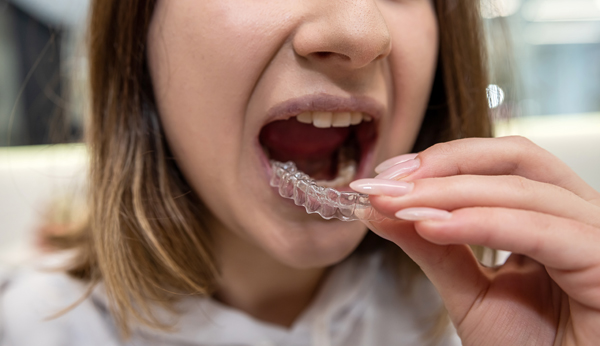
Clear aligners are a great way to straighten your smile discreetly. However, clear aligners require good oral hygiene to ensure no oral health complications develop during treatment. This review discusses the risks of not cleaning teeth properly each day when going through clear aligner treatment.
4 Consequences of poor oral hygiene with clear aligners
The risks of poor oral hygiene are often amplified when wearing clear aligners as bacteria and food particles can get trapped between teeth and the aligners. Several common issues that can occur as a result of poor oral hygiene with clear aligners are stained teeth, dental cavities, gum complications, and oral infection. Read on to find out more about how each condition can occur.
1. Stained teeth
Stained teeth are one of the main risks of clear aligners treatment. This is because it is more challenging to wash plaque, tartar, and bacteria off of teeth while wearing the aligners. When patients are unable to keep their teeth clean during treatment, mild to severe discoloration can occur. For mild discoloration, the patient may be able to remove the stains with teeth whitening during or after treatment. However, severe stains may require more extensive and costly treatment to remove the stains.
2. Dental cavities
When food particles combine with bacteria inside the mouth, it creates an acidic reaction that can weaken and erode the dental enamel. Enamel erosion is irreversible, which means it can only be treated through a dental filling or another type of dental restoration. Therefore, the best way to deal with dental cavities is through prevention. Cavities can be prevented through good oral hygiene, which should include brushing several times a day, flossing daily, and using mouthwash as directed, along with reducing the consumption of sugar and other carbohydrates that are harmful to teeth.
3. Gum complications
When teeth are not cleaned properly, food particles can get stuck on and in between teeth near the gum line. When this occurs, it significantly increases the risk of gum disease. If gum disease is left untreated for too long, then it can eventually lead to other gum complications such as gum erosion. Treating gum complications can be difficult, especially if the periodontal disease progresses into periodontitis. If this occurs, then the patient may require a dental deep cleaning, gum grafting, or gingival flap surgery.
4. Oral infection
An oral infection is a serious concern that develops when bacteria accumulate in one area. If a tooth infection occurs, the patient may require root canal therapy to remove the infected tooth pulp in order to save the tooth. Patients can prevent an oral infection through good oral hygiene, smart dietary choices, and regular visits to their dentist or orthodontist during clear aligners treatment.
Find out more about clear aligners today
Our team can help you through the entire clear aligner treatment process, from the consultation visit to providing follow-up care once treatment is complete. If you would like to learn more about clear aligners treatment, then get in touch with us today to arrange a time to come and see us for a consultation visit.
Request an appointment here: https://www.drdanbornstein.com or call Bornstein Family Dentistry at (707) 360-6353 for an appointment in our Santa Rosa office.
Check out what others are saying about our dental services on Yelp: Clear Aligners in Santa Rosa, CA.
Related Posts
Dental implants can replace missing teeth, but some patients may need a tooth extraction before treatment begins. This depends on whether a damaged or unhealthy tooth remains in the area where the implant will go. Our general dentist can examine your tooth, gums, and jawbone to decide whether saving the tooth or removing it offers…
Most people grow up hearing that dental care means one checkup with a family dentist every six months. While that schedule works well for many patients, it is not the right fit for every smile. Some people benefit from more frequent visits because their oral health needs, habits, or medical history place them at a…
A general dentist offers numerous smile maintenance services to help patients be confident and proud of their smiles. Some treatments require dentists to change the structure of the teeth, such as treating areas of decay, while others focus more on boosting the teeth’s resilience or keeping the gums healthy. No matter how long it has…
Routine visits with a general dentist are among the most effective ways to maintain optimal oral health. The American Dental Association recommends visiting the dentist at least twice yearly or every six months. These appointments can reduce the risk of oral health issues and catch existing ones in their early stages, ensuring your smile stays…